
Why are datacenter power supplies still cooled by fans?
Key takeaways:
- AI power density is exposing the limits of fan-cooled PSUs. As more power is packed into each rack, the power supply is becoming a bigger part of the thermal challenge.
- Liquid cooling changes PSU design, not just heat removal. Removing the fan affects airflow, component placement, packaging and the wider architecture of the power hardware.
- PSU cooling can be designed around existing hardware. Manufacturers can adapt current products or rethink the design from the outset, depending on what the hardware and cooling requirements demand.
The infrastructure around AI compute is under pressure
For the past few years, the AI infrastructure race has been largely about two things: chips and power. Get hold of enough GPUs, find enough electricity to run them, and you have the beginnings of an AI data center. Except the GPUs and the megawatts are only useful if everything around them can keep up.
In August, Elon Musk claimed that around 15GW of AI compute capacity built in 2027 could sit idle that year. The issue, however, isn’t just having enough electricity available: transformers, wiring, networking and liquid cooling all need to be designed, manufactured and installed before that compute can do anything useful.
And while much of the industry has focused on getting heat out of CPUs and GPUs, one part of the hardware stack has remained surprisingly unchanged: the power supply.
This article looks at why PSUs and power shelves are still largely dependent on fans, and what precision liquid cooling could mean for power hardware as rack densities continue to climb.
More power means more heat to deal with
Every watt delivered to computing hardware eventually becomes heat that has to go somewhere. And as processors have become hotter, the industry has responded by moving liquid closer to the silicon, from facility-level cooling to cold plates sitting directly on CPUs and GPUs.
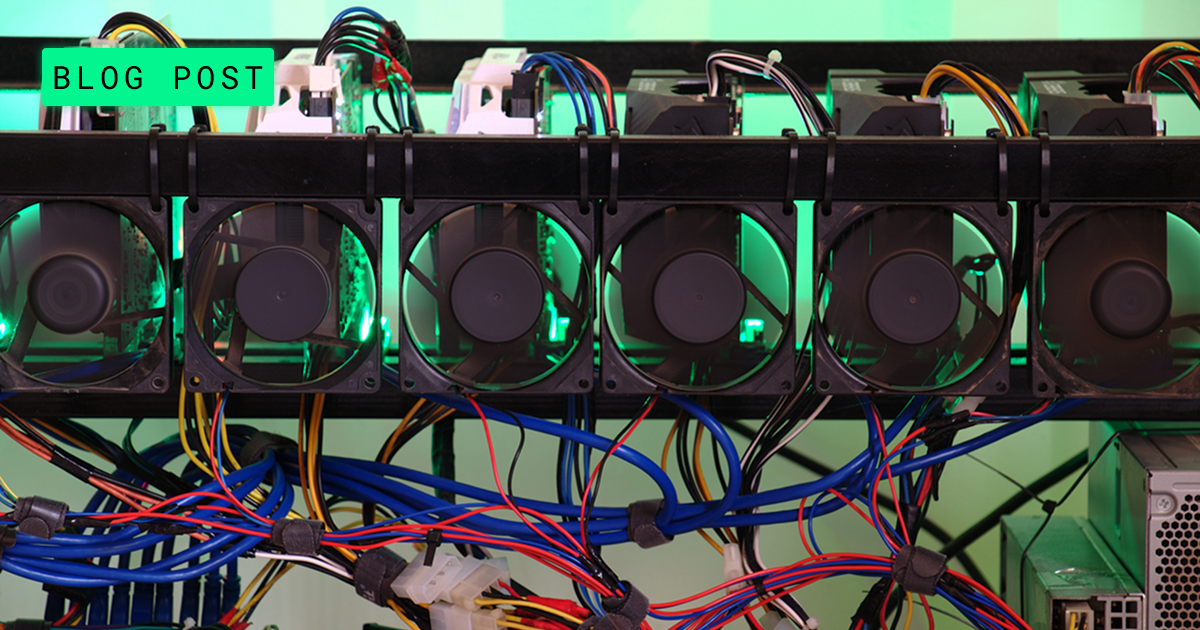
But there’s an odd gap in that story. The power supplies feeding those processors are, in many cases, still cooled the same way they have been for years: with a fan. That was manageable when rack power densities were lower, but current data center power density trends are making that harder to ignore as AI workloads demand more power.
As those densities rise, data center power cooling becomes less about dealing with one hot component and more about how the whole rack handles the heat created by higher power consumption.
This is where Musk’s wider point becomes relevant - supplying the facility with enough electricity is only part of the challenge. As more of that power is concentrated into each rack, the hardware also has to deal with the additional heat that comes with it.
And that raises an awkward question for liquid-cooled AI infrastructure: why stop at the GPU? If the industry is designing racks around far higher power consumption, how long does it make sense for part of that power architecture to rely on a fan?
Data center liquid cooling has ignored the power supply
There’s a fairly simple reason data center power and cooling has focused so heavily on the processor first: that was where the thermal problem became impossible to ignore.
Power supplies have never faced the same pressure. For decades, the basic approach has been pretty consistent: put a fan in the unit, move air across the components and design the hardware around that airflow.
That worked because it didn’t need to be especially complicated. As processor power climbed, though, server cooling had to keep changing to deal with the heat. PSUs never faced quite the same pressure, so there has been far less reason to rethink what happens when the fan is no longer there.
In hybrid cooling systems, the PSU is often one of the components still left on air. But liquid cooling isn’t something you can simply bolt onto a PSU after the fact - it affects the design of the unit itself: how components are arranged, where heat is concentrated and how the hardware is built to operate within that thermal environment.
Power shelves take the same problem and make it harder to ignore. Multiple power modules can sit together in a compact space, producing enough heat that the cooling of the power supply system needs to be considered as part of the design.
This is still relatively new territory. PSUs have traditionally relied on fans, so manufacturers have far more experience designing servers around liquid cooling than they do designing power supplies for it. But that’s arguably part of the opportunity.
Instead of trying to retrofit liquid cooling onto hardware designed around air, the better question is what the design looks like when liquid cooling is considered from the outset.
What changes when you take the fan out?
For a PSU manufacturer, moving to liquid cooling is not simply a case of swapping one cooling component for another. Take away the fan and some of the assumptions built into the PSU cooling design go with it.
The obvious difference is airflow. A fan-cooled PSU needs space to move air across the components producing heat. Precision liquid cooling instead brings dielectric fluid directly into contact with those components, removing the need to move large volumes of air through the unit.
That changes more than the way heat is removed. Removing the fan takes a moving part out of the system, which has implications for noise and reliability, while also creating different options for how the power hardware is packaged within the available space.
Whether the PSU can keep the same form factor is less straightforward. Liquid cooling doesn’t automatically mean a smaller PSU, just as removing the fan doesn’t mean every other part of the unit can stay exactly where it is.
Iceotope can design around existing hardware or work with manufacturers from the ground up, depending on the product. In either case, the starting point is the same: understanding what the new cooling architecture allows the manufacturer to keep and what needs to change once airflow is no longer driving the cooling design.
The cooling architecture doesn't have to start with a blank sheet
One of the things we’ve learned from server cooling is that precision liquid cooling doesn’t have to be designed around a single mechanical layout.
Iceotope has already adapted production servers from HPE, Dell and Gigabyte for precision liquid cooling, working with the hardware that already exists rather than asking manufacturers to start again from scratch.
The same design principle applies to power hardware: start with the PSU or power shelf as it is, then work out how the cooling architecture needs to fit around it. In some cases, much of the existing design can stay intact. In others, removing the constraints of air cooling creates scope for much more substantial changes to the layout.
The aim is to make the cooling architecture work with the hardware and the requirements of the product, rather than force the hardware into a fixed design.
So where does a PSU manufacturer start?
That brings us back to Musk’s point. Getting AI compute online requires the surrounding infrastructure to keep pace with the hardware itself. Power supplies and power shelves are part of that infrastructure, and the way they are cooled will increasingly shape what can be packed into the rack. That makes data center power and cooling a hardware design question as much as a facility one.
For OEMs and power shelf manufacturers, the first design questions are fundamental: if the hardware has always been built around air, what do you keep and what do you redesign?
The starting point is the hardware itself:
- Are you adapting an existing product or designing something new?
- Which parts of the layout need to stay fixed?
- Where is heat being generated?
- What becomes possible once airflow no longer dictates how that heat is removed?
That is where Iceotope’s design-house approach comes in: working with OEMs to develop the cooling architecture around the PSU or power shelf they want to build, rather than forcing them to fit their product around a fixed cooling design.
If you’re developing a PSU or power shelf for higher-density systems, talk to Iceotope about how precision liquid cooling could be designed into the hardware from the start.