
Why precision liquid cooling beats air for next‑gen AI
Key Takeaways:
- Modern AI GPUs (like NVIDIA H100s or B200s) draw power of 700W to 1,200W+ per chip; next-gen datacenters are predicted to draw 1 MW to 1.5 MW per rack
- Traditional air-cooling methods lack the ability to effectively cool next-gen AI cabinets, while water’s heat transfer coefficient is 3,500 times greater than air
- A 10% increase in airflow demands 33% more fan power, creating an energy consumption spiral that makes air cooling unsustainable
As AI clusters push rack densities towards 1MW, traditional air‑cooling methods can't keep up. CRAC and CRAH‑based architectures struggle with hot spots, rising PUE, and spiraling water and energy consumption while they attempt to keep GPUs from throttling. Iceotope’s precision liquid cooling offers an alternative: a fully sealed, dielectric, direct‑to‑everything system that removes nearly all the heat at source while cutting cooling energy by up to 40% and water use by up to 96%.
How air cooling works – and where it breaks down
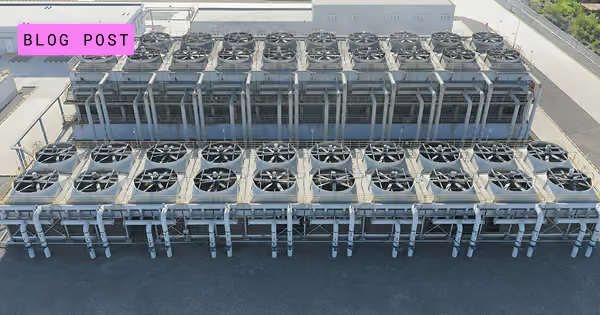
Traditional data centers rely on room‑level air management using CRAC or CRAH units to push large volumes of air through IT racks. Cold air passes through server inlets, picks up heat, and returns to the cooling units, which then reject heat via refrigerant or chilled water methods.
Today’s AI and HPC systems, with dense GPU trays and power‑hungry accelerators, generate far more heat in a smaller footprint and create hot spots that air cooling methods cannot remove efficiently. Meanwhile, the higher fan speeds, lower air temperatures, and more aggressive airflow containment needed to cool hotter chips further raise energy consumption.
What is precision liquid cooling?
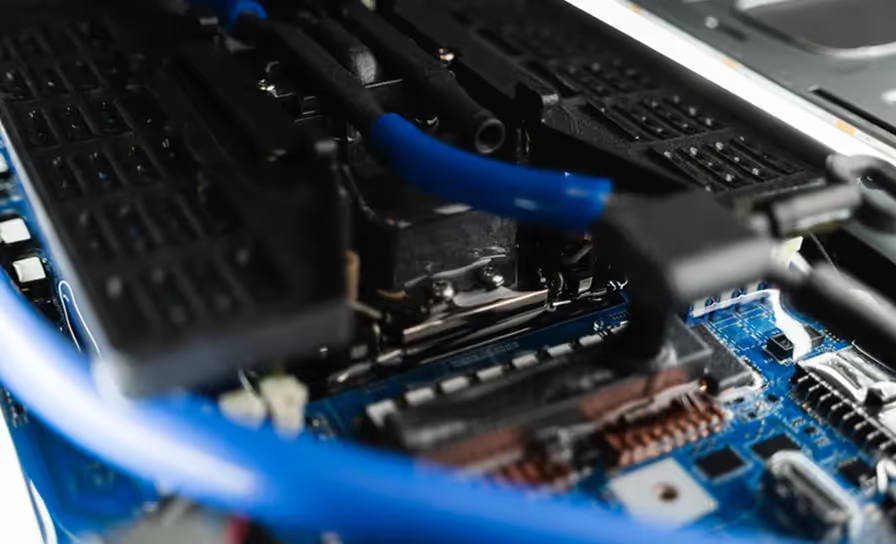
Iceotope precision liquid cooling uses a small quantity of environmentally safe dielectric in a fully sealed chassis to cool all server components: CPUs, GPUs, memory, storage, and power supplies.
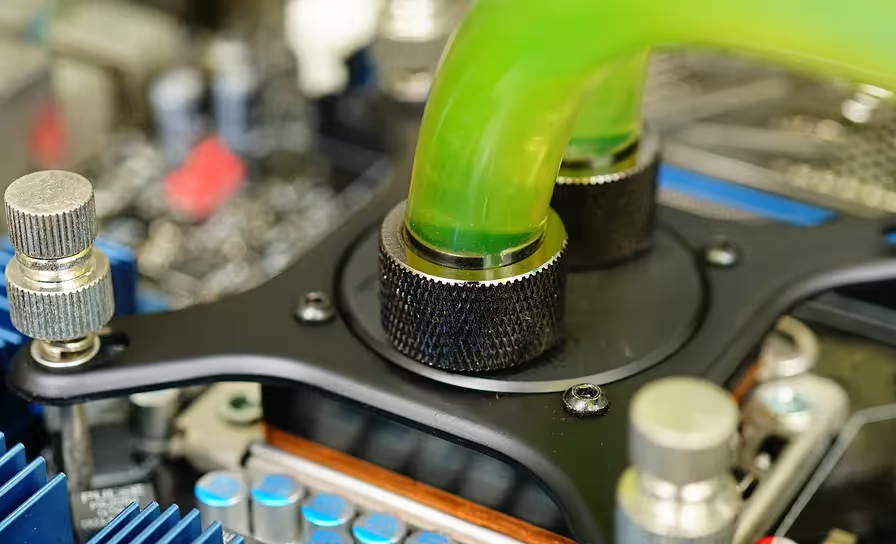
That dielectric fluid is circulated through an in‑chassis manifold to the hottest components, capturing nearly 100% of the heat generated across the entire system. The captured heat is then transferred to a warm‑water secondary loop and rejected via dry coolers, or reused for secondary applications such as space or district heating, eliminating the need for evaporative cooling and cooling towers.
Comparision: air cooling vs. precision liquid cooling
Why AI, HPC, and edge needs precision liquid cooling
AI training clusters, real‑time inference at the edge, and modern HPC workloads all face a similar cooling challenge: their thermal design is outpacing what conventional air can handle. Without a more efficient cooling strategy, operators face throttled performance, constrained capacity, and rising operating costs, while AI demand surges.
Iceotope precision liquid cooling allows operators to run denser racks without drastic facility upgrades, while dramatically cutting water and energy use. The sealed, fanless operation of precision liquid cooled servers also improves acoustic performance and resilience in harsh or non‑traditional environments.
Contact us to collaborate on a precision liquid cooling solution for AI, HPC, or edge deployments today.