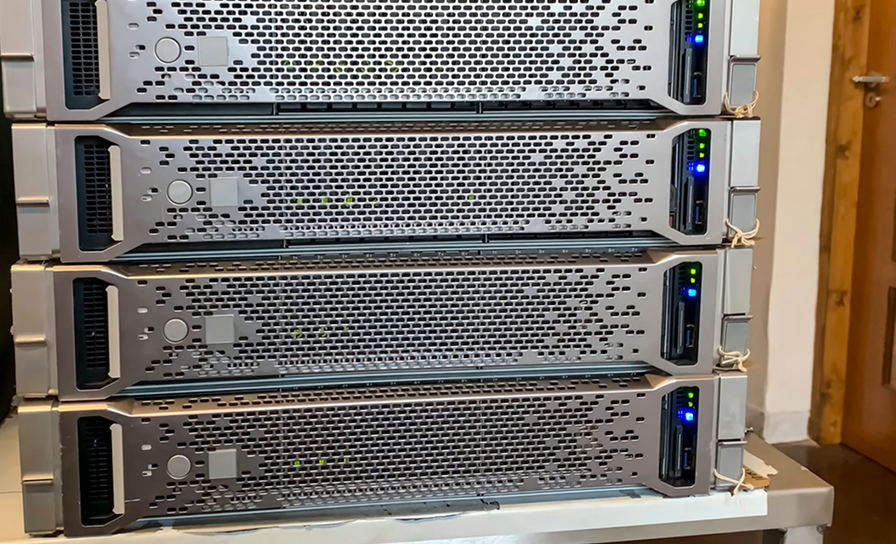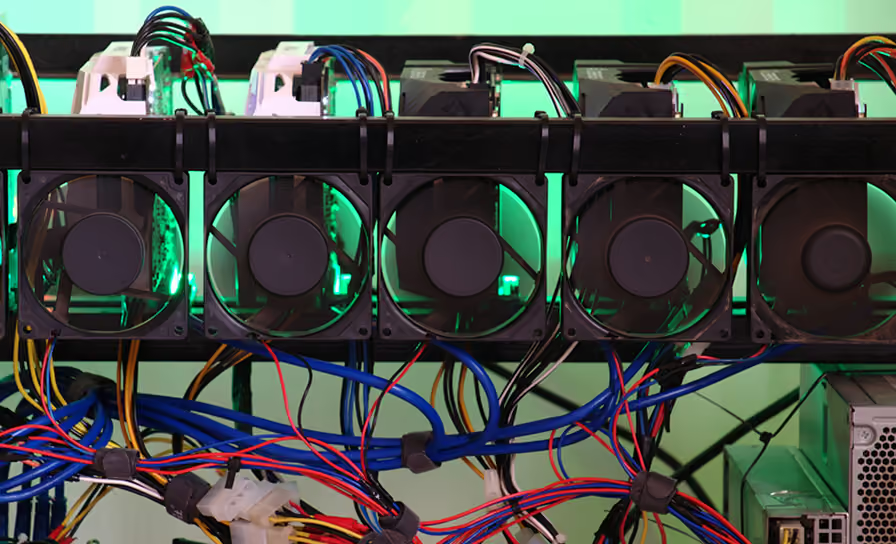

Precision liquid cooling for high density compute at the edge
Key takeaways:
- High-density compute fits in small spaces. Sealed, chassis-level liquid cooling removes the need for fans, large heatsinks and room-level air systems. Space-limited edge sites can run AI-class hardware.
- It suits real-world edge environments. A sealed enclosure keeps out dust, humidity and moisture. The system runs quietly near people and draws less power, and it's light enough to go into existing offices, stores and labs without new electrical service or reinforced floors.
- It's more reliable and easier to service. With no fans to fail and components protected from their surroundings, uptime goes up. Each rack-mounted server can be serviced on its own without shutting down the whole system.
AI requires more powerful chips to be squeezed into denser racks, which produces more heat than traditional air cooling can handle. As a result, data center operators are moving to liquid cooling. However, AI is no longer limited to data centers.
More compute, less space
Space, or the lack of it, is one of the first challenges.
Traditional data centers have the room to support large-scale infrastructure for both air and liquid cooling. Racks can be moved around to take better advantage of airflow, while there is plenty of space for large cooling equipment like air handlers, heat exchangers and evaporative chillers. Edge deployments don’t have that kind of space or flexibility.
Self-contained liquid cooling changes the space equation. A sealed chassis-level system uses nonconductive dielectric fluid to capture heat at the component level and move it away from the server through a closed loop. By doing away with the need for internal fans, large heatsinks and room-level air cooling, small spaces can now handle high-end compute.
Many environmental challenges, one cooling technology
Dust, humidity and moisture can affect the reliability of sensitive electronics while making it harder to keep them cool. A sealed liquid-cooled chassis separates the electronics from the surrounding environment. With the processors, memory, storage, power supplies and other components in a sealed, self-contained enclosure, they can operate reliably at peak performance.
Cooling gets harder when compute moves closer to people
While some edge deployments are in remote locations, many are close to people. They might be inside a retail store, research lab, medical facility, office or other space where people are working nearby. That makes noise an issue.
Cooling at the edge doesn’t just need to be more space-efficient; it needs to be quiet. High-speed server fans can create a lot of noise. That may be manageable inside a data center, but it becomes a much bigger issue when people are working nearby.
Power can also be limited at the edge. Sealed, rack-level liquid cooling systems aren’t just more space-efficient and thermally efficient than air cooling; they also require significantly less power to operate. That’s important for edge deployments where it’s not possible to make major upgrades to the electrical service.
Physical infrastructure is another limitation. While data centers have raised floors, high ceilings and are structurally designed to bear the loads of heavy equipment, that’s usually not the case at the edge. Compute and related cooling systems need to be compact and light enough to fit into smaller spaces without reinforced floors. Self-contained, liquid-cooled servers can often be moved into existing office and industrial environments without modifying the infrastructure.
Cooler, more reliable, and more serviceable
Sealed, liquid-cooled systems eliminate the need for failure-prone equipment like fans and protect the components from the surrounding environment, improving overall reliability. Self-contained, rack-mounted liquid-cooled servers can also be serviced individually without shutting down an entire system. That makes the technician’s job easier and service less disruptive.
Thinking about bringing compute to the edge? Talk to Iceotope about using precision liquid cooling to build system architecture designed for the environments where your compute needs to run.