
BBC report: The technology keeping data centers cool
Key takeaways
- Liquid cooling is rapidly moving from niche to mainstream as traditional air-cooled data centers struggle with the heat and power demands of AI and high‑performance chips
- New cooling approaches can significantly cut energy and water use and even enable heat reuse, but they demand major changes to data centre design and operations
- Regulators and local communities are increasingly scrutinizing data center energy and water footprints, pushing operators toward more transparent, efficient cooling strategies
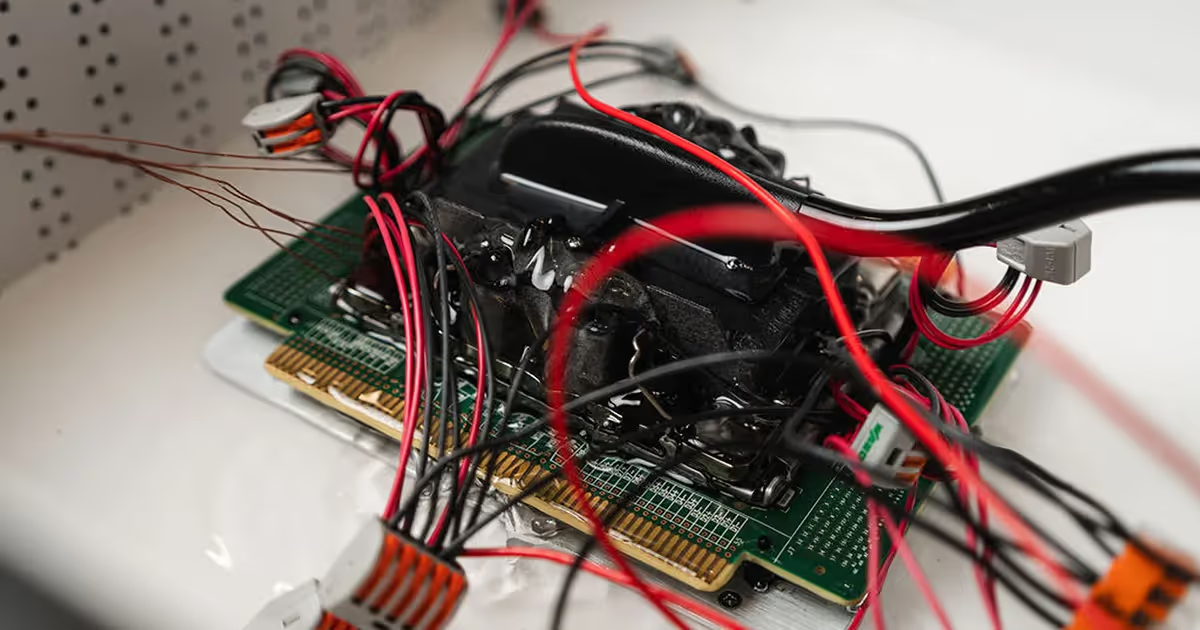
In a recent article, the BBC explores how booming AI demand is pushing data centers beyond the limits of traditional air cooling and spotlights liquid cooling innovations from Iceotope. Modern data centers, especially those running AI workloads, generate intense heat that conventional air cooling can no longer manage efficiently. To cope, operators are adopting liquid cooling techniques such as direct‑to‑chip cold plates, immersion “baths,” and shower‑like systems that bring dielectric fluids into direct contact with components to remove heat more effectively. These technologies can support higher rack densities and even continuous overclocking, while opening up options to capture waste heat for secondary uses like heating buildings or swimming pools.
However, the shift is not trivial: Liquid systems require different facility layouts, plumbing, maintenance skills, and safety protocols compared with traditional air‑cooled halls. The BBC notes that while some hyperscalers and specialist providers are piloting advanced cooling, many legacy sites face costly retrofits or capacity limits as chip power rises. Alongside technical challenges, environmental concerns are mounting, with campaigns and research highlighting the strain large data centers can place on local power grids and water resources. This is driving interest in more efficient, closed‑loop liquid solutions and in locating facilities where waste heat can be productively reused, aligning cooling innovation with broader sustainability and community expectations.

Talk to us about AI infrastructure solutions that are ready for what’s next.