
Single-phase immersion cooling of high density storage

Key takeaways
- Single-phase immersion using Iceotope’s precision liquid cooling can reliably cool a 72‑drive, high‑density storage chassis at 40 °C facility water while keeping all components within safe temperature limits.
- Immersion dramatically reduces HDD temperature gradients (to <3 °C vs up to ~18–19 °C in air), improving thermal uniformity and lowering many component temperatures compared to air cooling.
- The cooling solution is efficient and quiet, with pump power under 5% of IT power and no fan noise or fan‑induced acoustic vibration that can negatively impact drive performance.
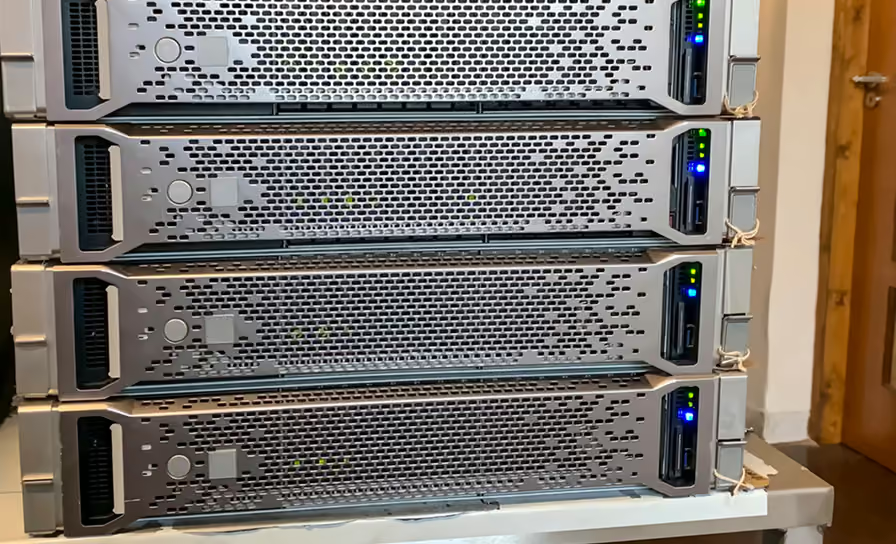
This whitepaper, presented at ASME InterPACK 2022, represents a collaborative Meta–Iceotope study that re‑engineers a standard air‑cooled high‑density storage system (OCP Bryce Canyon) to use single‑phase immersion cooling based on Iceotope’s precision liquid cooling technology.
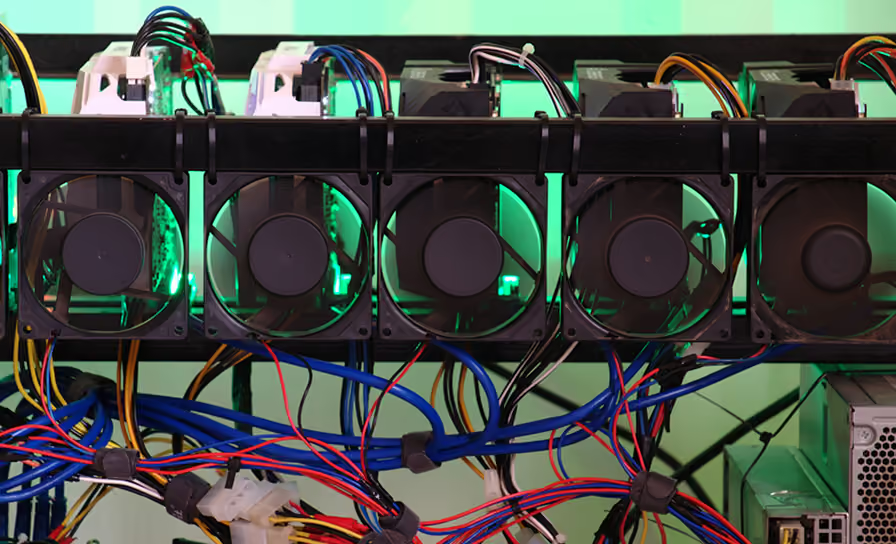
The 4OU chassis contains seventy‑two 3.5” helium‑filled hermetically sealed HDDs, two single‑socket Mono Lake compute nodes, SAS expander cards, NICs, and a power distribution board, and is redesigned to maintain hot‑swap capability and cooling redundancy comparable to the original air‑cooled system.
Testing compares air cooling at 20°C and 45°C inlet air to immersion cooling at 40°C facility water, with CPUs stressed using MPRIME and HDDs stressed with FIO. Under immersion, all seventy‑two drives are cooled in parallel, and HDD temperature variation shrinks to less than 3°C while operating comfortably below their 60°C limit, versus gradients up to 18–19°C in air. Most key components (CPUs, DIMMs, many chips) run cooler under immersion than in the comparable air‑cooled cases, with the exceptions traceable to SAS chips placed in the warm return stream and a DIMM misalignment that was later corrected.
The system operates reliably with 40°C facility coolant; measured dielectric supply and return temperatures are approximately 44.2°C and 46.9°C, respectively. Pump power is about 46 W, (just under 5% of total IT power), highlighting high cooling efficiency. Beyond thermal and energy benefits, the authors emphasize that the fanless immersion system is virtually silent, potentially eliminating fan‑induced acoustic vibrations that can degrade HDD performance. The paper concludes that single‑phase immersion, implemented in a chassis form factor with hot‑swap support, is a practical and efficient cooling solution for high‑density storage systems, offering tighter temperature control, reduced gradients, low overhead cooling power, and improved acoustic behavior compared to air cooling.
Read the full study to learn more.

Learn more about our testing methodology and results