


How 3D printing supports Iceotope’s in-house testing
Key Takeaways:
- Prototype lead times dropped from ~1 week (outsourced) to same-day, sometimes less than an hour
- We used this capability to qualify glass fibre reinforced nylon for use with Shell S3X dielectric coolant
- In-house printing was critical to building Iceotope's new long-term seal test rig, alongside broader engineering disciplines
When I joined Iceotope earlier this year, we had an Ultimaker 3D printer sitting largely unused. Having previously worked extensively with Bambu Lab printers at the University of Sheffield, I saw an opportunity to bring additive manufacturing back into our day-to-day engineering workflow.
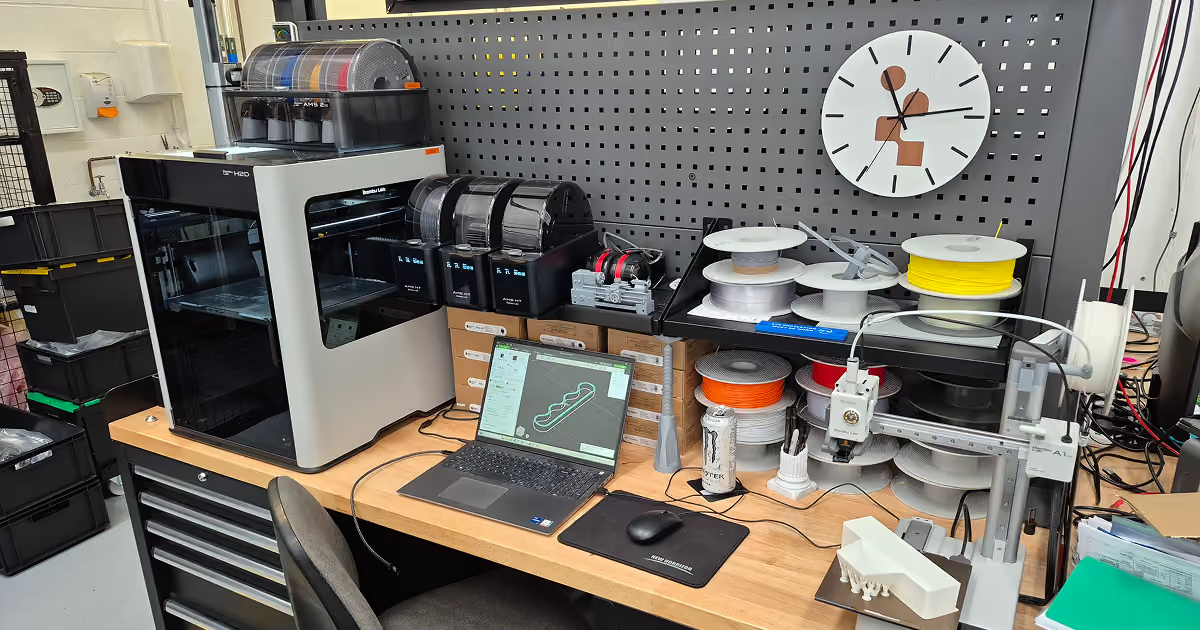
We invested in a Bambu Lab H2D and an A1 Mini. I set up the printers, organised the printing area, and integrated the equipment into how our engineers work.
Same-day parts, not same-week parts
The biggest impact has been on prototype lead times. Previously, engineers would wait around a week for outsourced 3D printed parts. Now, many prototypes are designed, printed and in hand the same day, and sometimes within the hour.
That speed changes how engineers work. They can iterate on designs faster, run fit checks before committing to machined parts, and keep projects moving without waiting on external suppliers.
Qualifying materials for real applications
One of our first projects was qualifying PA6-GF, a high-performance engineering thermoplastic made of glass fibre reinforced nylon, for use with our Shell S3X dielectric coolant. We produced test samples in-house and our engineering team assessed them, confirming the material's suitability. Since then, PA6-GF has become a workhorse material for us. We can now produce functional components that go directly into our liquid-cooled server chassis.
Alongside PA6-GF, we use acrylonitrile styrene acrylate (ASA), an engineering-grade thermoplastic filament known for exceptional UV resistance, outdoor durability, and mechanical strength. ASA is used alongside PLA (polylactic acid) for concept models, design reviews, fit checks and workshop tooling. Having the right material for the right job, printed in-house, means we're never compromising on a prototype because of turnaround time.
Seal test rig: additive manufacturing in practice
A recent project has put this capability to real use. Over the past few months I've been designing and building a long-term seal test rig to evaluate the sealing performance of electrical connectors under controlled pressure and temperature conditions, monitoring multiple samples simultaneously over extended periods.
The project spanned mechanical design, fixture development, supplier coordination, component selection, assembly, commissioning and testing. In-house 3D printing was used throughout to produce custom parts and accelerate development. This is exactly the kind of cross-disciplinary project our additive manufacturing setup was built to support.
It's been a great opportunity to work across different engineering disciplines and help build a test capability that will support future product development at Iceotope. I’m looking forward to seeing what the rig tells us over the coming months.
Building the capability, not just the kit
Beyond the equipment itself, I've trained our engineers on using the printers and continue to support the team with additive manufacturing, CNC machining and general workshop needs. The goal was never just to upgrade our printers; it was to make additive manufacturing a genuine, reliable part of how Iceotope develops products.